For PE teachers · Age 5–18
How to Conduct the Fit India Fitness Test in School
A practical, step-by-step guide to running the Fit India (SAI Khelo India) fitness test for a class: what to prepare, how to set up stations, what to do on the day, and how to record and report the scores.
1. Before test day
Check which tests each class takes. Use each student’s age in completed years on the test day. Open any test for the full procedure, a labelled diagram and the norms.
Age 5–8 (Class 1 to 3)
Age 9–18 (Class 4 to 12)
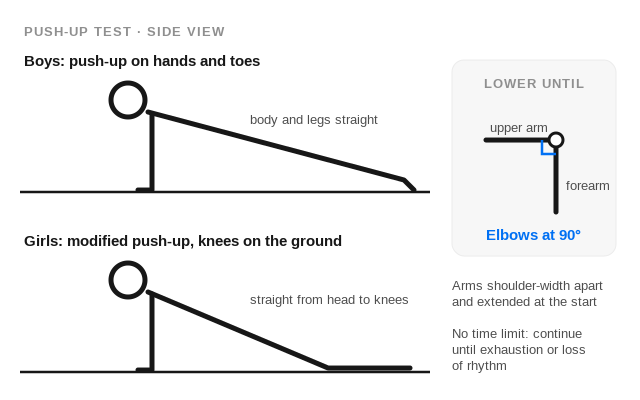
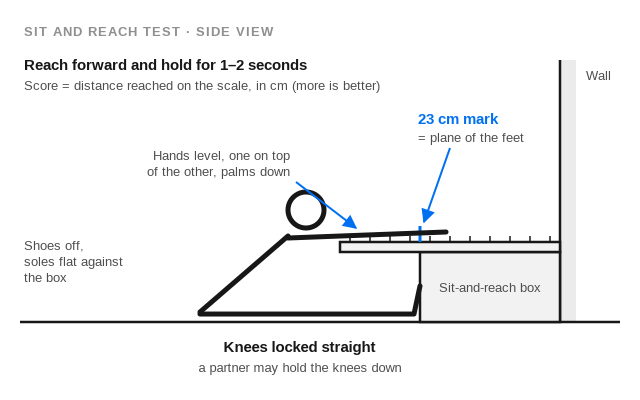
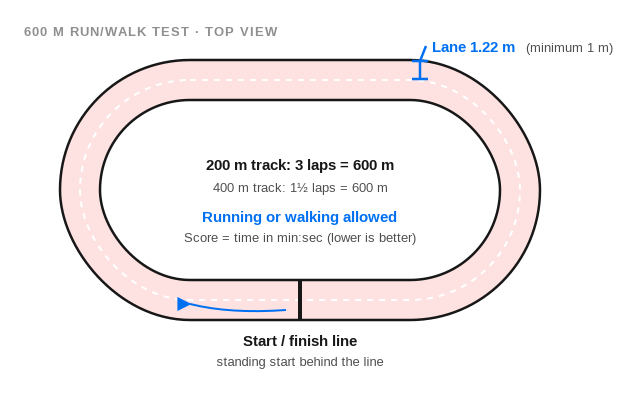
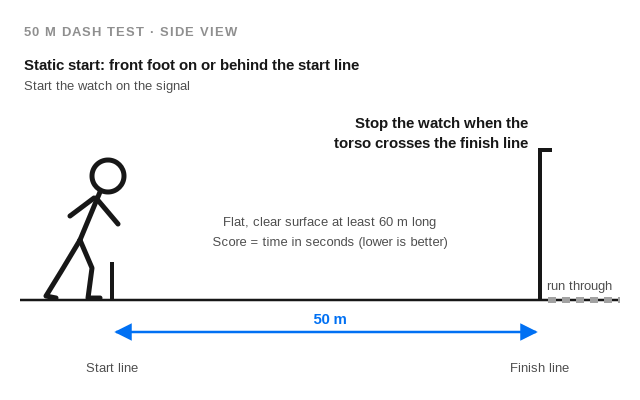
Equipment checklist
Everything listed on the test pages, in one place. Tick items off as you collect them.
Age 5–8
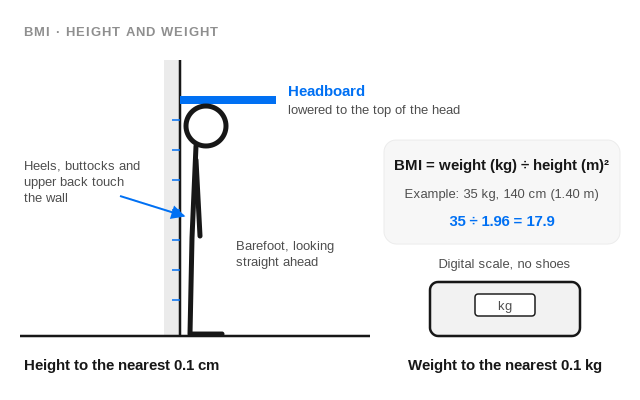
- Stadiometer or a measuring tape fixed vertically to a flat wall (BMI)
- Digital weighing scale (not a spring bathroom scale), checked against a known weight (BMI)
- Record sheet or the Fitness Report Card template (BMI)
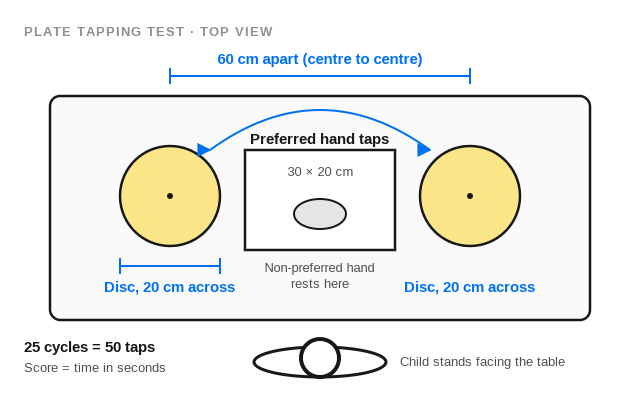
- Table with adjustable height (Plate Tapping)
- Two yellow discs, 20 cm in diameter, with their centres 60 cm apart (Plate Tapping)
- A 30 × 20 cm rectangle placed midway between the two discs (Plate Tapping)
- Stopwatch (Plate Tapping, Flamingo Balance)
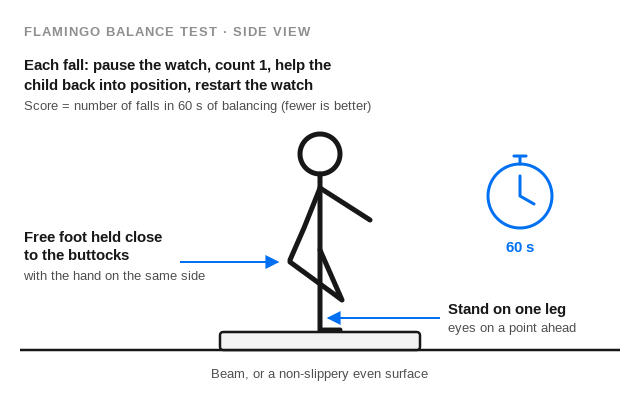
- A beam, or a non-slippery even surface (Flamingo Balance)
Age 9–18
- Stadiometer or a measuring tape fixed vertically to a flat wall (BMI)
- Digital weighing scale (not a spring bathroom scale), checked against a known weight (BMI)
- Record sheet or the Fitness Report Card template (BMI)
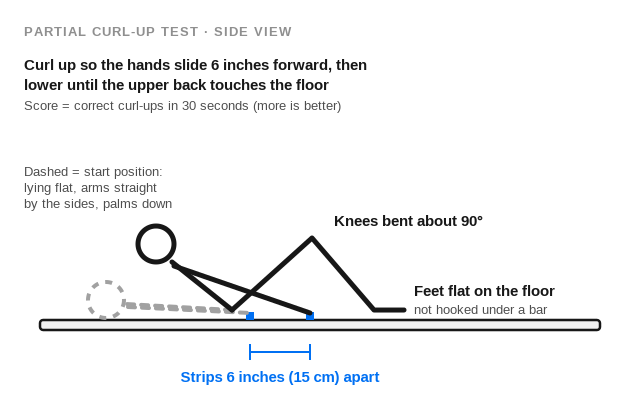
- Cushioned, flat surface with two parallel strips 6 inches (about 15 cm) apart (Partial Curl-up)
- Stopwatch (Partial Curl-up, 600 m Run/Walk)
- A partner to count (Partial Curl-up)
- Mat or flat surface (Push-ups)
- A partner or teacher to count (Push-ups)
- Sit-and-reach box: sides 12" × 12", front and back 12" × 10", top 12" × 21" with centimetre gradations (Sit and Reach)
- A wall to place the box against (Sit and Reach)
- A 200 m or 400 m track, lane width 1.22 m (minimum 1 m) (600 m Run/Walk)
- Whistle (600 m Run/Walk)
- Marker cones (600 m Run/Walk)
- Lime powder (600 m Run/Walk)
- Measuring tape (600 m Run/Walk)
- A flat, clear surface at least 60 m long (50 m Dash)
- Stopwatch (accurate to 0.1 s) (50 m Dash)
- Start and finish markers (50 m Dash)
2. Setting up stations
This is a suggestion that works in many schools, not an official rule. Set up one station per area of fitness and move small groups from station to station. Keep the running tests for last: running tires students and can lower their scores on the other tests.
- Height and weight (BMI), measured privately
- Balance and coordination (age 5–8), then flexibility (age 9–18)
- Strength: curl-ups and push-ups
- 50 m Dash
- 600 m Run/Walk, last
| Station | Where | Tests | Equipment |
|---|---|---|---|
| Height and weight | Indoor | BMI | Stadiometer or a measuring tape fixed vertically to a flat wall; Digital weighing scale (not a spring bathroom scale), checked against a known weight; Record sheet or the Fitness Report Card template |
| Balance and coordination (age 5–8) | Indoor | Plate Tapping, Flamingo Balance | Table with adjustable height; Two yellow discs, 20 cm in diameter, with their centres 60 cm apart; A 30 × 20 cm rectangle placed midway between the two discs; Stopwatch; A beam, or a non-slippery even surface |
| Flexibility | Indoor | Sit and Reach | Sit-and-reach box: sides 12" × 12", front and back 12" × 10", top 12" × 21" with centimetre gradations; A wall to place the box against |
| Strength | Indoor or shaded | Partial Curl-up, Push-ups | Cushioned, flat surface with two parallel strips 6 inches (about 15 cm) apart; Stopwatch; A partner to count; Mat or flat surface; A partner or teacher to count |
| Speed | Outdoor | 50 m Dash | A flat, clear surface at least 60 m long; Stopwatch (accurate to 0.1 s); Start and finish markers |
| Endurance (last) | Outdoor | 600 m Run/Walk | A 200 m or 400 m track, lane width 1.22 m (minimum 1 m); Stopwatch; Whistle; Marker cones; Lime powder; Measuring tape |
3. On test day
Warm-up
- Students do a thorough warm-up, including some practice starts.
- A gentle warm-up before the test gives a truer score.
- Make sure students warm up and have water available.
Demonstrate each test
Before each station starts, show the test once and explain how it is scored. Follow the procedure on each test page exactly, so results are fair and comparable between students and over time:
- BMI for Children: 4 steps, with a diagram
- Plate Tapping Test: 4 steps, with a diagram
- Flamingo Balance Test: 5 steps, with a diagram
- Partial Curl Up Test: 4 steps, with a diagram
- Push Up Test: 4 steps, with a diagram
- Sit and Reach Test: 5 steps, with a diagram
- 600 Meter Run Test: 4 steps, with a diagram
- 50 Meter Dash Test: 4 steps, with a diagram
Safety and fairness
- BMI: Measure privately and talk about BMI sensitively — it is a health screen, not a grade.
- Flamingo Balance: If the child has more than 15 falls in the first 30 seconds, the test is terminated.
- 600 m Run/Walk: Small groups make timing easier and more accurate.
- 50 m Dash: Time two students at once only if you have two timers.
- Push-ups: Watch for sagging hips — that rep does not count.
- BMI: Measure at the same time of day for baseline and endline.
4. Recording scores
Print or copy this layout, one row per student. The column names match the class analysis template, so the scores can be uploaded without changes.
Recording sheet: Age 9–18 (Class 4–12)
| Roll No | Name | Gender | Age | Height (cm) | Weight (kg) | Partial Curl-up (count) | Push-ups (count) | Sit and Reach (cm) | 600 m Run (min) | 600 m Run (sec) | 50 m Dash (s) |
|---|---|---|---|---|---|---|---|---|---|---|---|
Recording sheet: Age 5–8 (Class 1–3)
| Roll No | Name | Gender | Age | Height (cm) | Weight (kg) | Plate Tapping (s) | Flamingo Balance (falls) |
|---|---|---|---|---|---|---|---|
- Age: completed years on the test day.
- Gender: Boy or Girl.
- Leave a cell blank if the test was not done. “AB” or “NA” are treated as blank.
- 600 m Run: minutes in one column and seconds in the next (for example 3 and 25).
- Use the same Roll No for each student in every test, so baseline and endline can be matched.
After the test, type the scores into the Excel or CSV template on class analysis (or keep these same column names in your own sheet) and upload it. Files are read and scored inside your browser. Nothing is uploaded, stored on a server or shared. Close the tab and the data is gone.
5. After the test
- Upload the file to class analysis to get each student’s levels, a class summary for each test and a list of students who need attention.
- Download PDF report cards for the whole class in one click, and print them.
- Keep the file. Repeat the test at the end of the year with the same Roll Nos and the same conditions.
- Upload the baseline and endline files to progress to see which tests improved, stayed the same or declined.
Each score is placed on one of seven levels. Read levels L1–L7 and points explained.
- L1 · 2 ptsWork Harder
- L2 · 4 ptsMust Improve
- L3 · 6 ptsCan Do Better
- L4 · 7 ptsGood
- L5 · 8 ptsVery Good
- L6 · 9 ptsAthletic
- L7 · 10 ptsSports Fit
Frequently asked questions
Which fitness tests do Class 1–3 and Class 4–12 students take?
Age 5–8 (Class 1–3): BMI, Plate Tapping and Flamingo Balance. Age 9–18 (Class 4–12): BMI, Partial Curl-up, Push-ups (modified push-ups for girls), Sit and Reach, 600 m Run/Walk and 50 m Dash.
What equipment do I need to conduct the Fit India fitness test?
Mostly simple items: a measuring tape or stadiometer, a digital weighing scale, stopwatches, a mat, a sit-and-reach box and a track or flat ground for the runs. The combined equipment checklist on this page lists every item and which test needs it.
In what order should the tests be done?
A common practical order is height and weight first, then balance, flexibility and strength, then the 50 m Dash, and the 600 m Run/Walk last so tired students do not score lower on other tests. This is a suggestion, not an official rule.
Do students’ names and scores leave my computer?
No. Files are read and scored inside your browser. Nothing is uploaded, stored on a server or shared. Close the tab and the data is gone.
Is this an official SAI, Khelo India or Fit India document?
No. This is a practical guide written for teachers, not an official document. Follow the official Fit India protocol and your school’s or board’s instructions. This is an independent, free tool. It is not affiliated with, endorsed by or operated by the Sports Authority of India, Khelo India or the Fit India Mission.